How do porta potties work?
The unit is a sealed box, not a miniature bathroom. Under the seat sits a holding tank, about 60 to 70 gallons on a standard unit, built into a footprint roughly 44 by 48 inches with a stall standing about 92 inches tall. When someone uses it, waste drops straight into the tank, where a blue chemical solution breaks down solids and knocks back the smell. There's no flush, no water line, nothing to hook up. That's the tradeoff: no plumbing means it can go almost anywhere in Bellflower, from a backyard remodel to a jobsite. A vent stack pulls odor up and out rather than back through the stall. Toilet paper sits in a small dispenser mounted to the wall. Once the tank fills, a technician arrives with a vacuum truck, pumps the tank empty, rinses if needed, and drops in fresh chemical and paper. ANSI/PSAI Z4.3 sets the baseline service interval at once a week for up to 10 users over a 40 hour week, which is why most residential and small event rentals run on a weekly pump schedule. For anyone still deciding what to book, the porta potty rental page walks through unit types side by side.
How do flushable porta potties work?
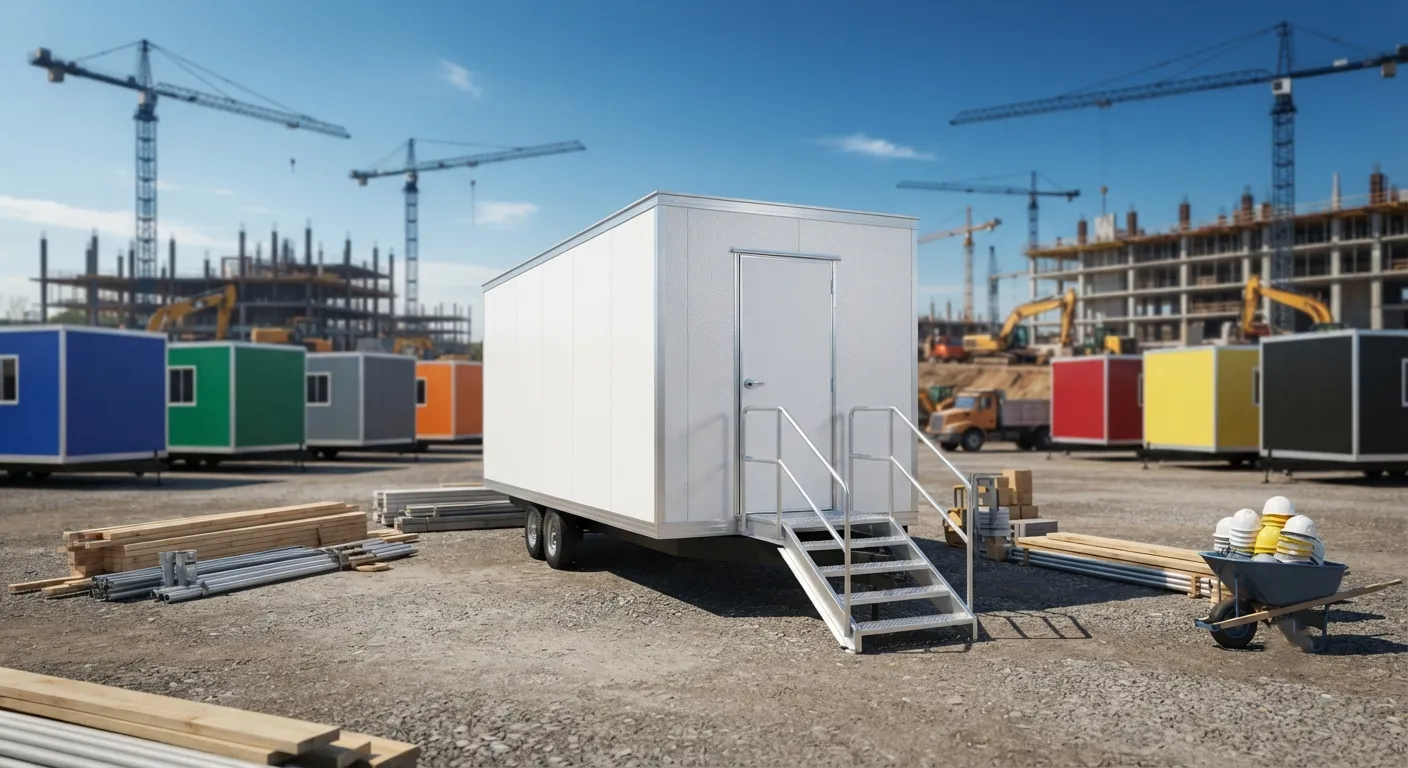
A flushable unit adds a small onboard freshwater tank and a foot pump or hand lever that pushes a splash of water through the bowl after use, which is the main difference buyers ask about on the deluxe flushable porta potty page. It still drains into the same kind of holding tank below, just with a flush action layered on top instead of a dry drop. These run higher than a standard unit and are the common pick for weddings and corporate events where guests expect something closer to a real bathroom. Restroom trailers take this further with sinks, mirrors and multiple stalls, which is why a restroom trailer rental makes more sense than a single flushable unit once headcount climbs past a hundred or so. Both flushable units and trailers still need regular pump-outs. The tank capacity is smaller relative to water use, so service intervals often run tighter than a standard unit on the same job. Anyone comparing the two side by side should check the ADA accessible porta potty option too, since ADA Standards section 213.2 requires at least one accessible unit, and never fewer than one, wherever units are clustered together.
How does a portable sink work?
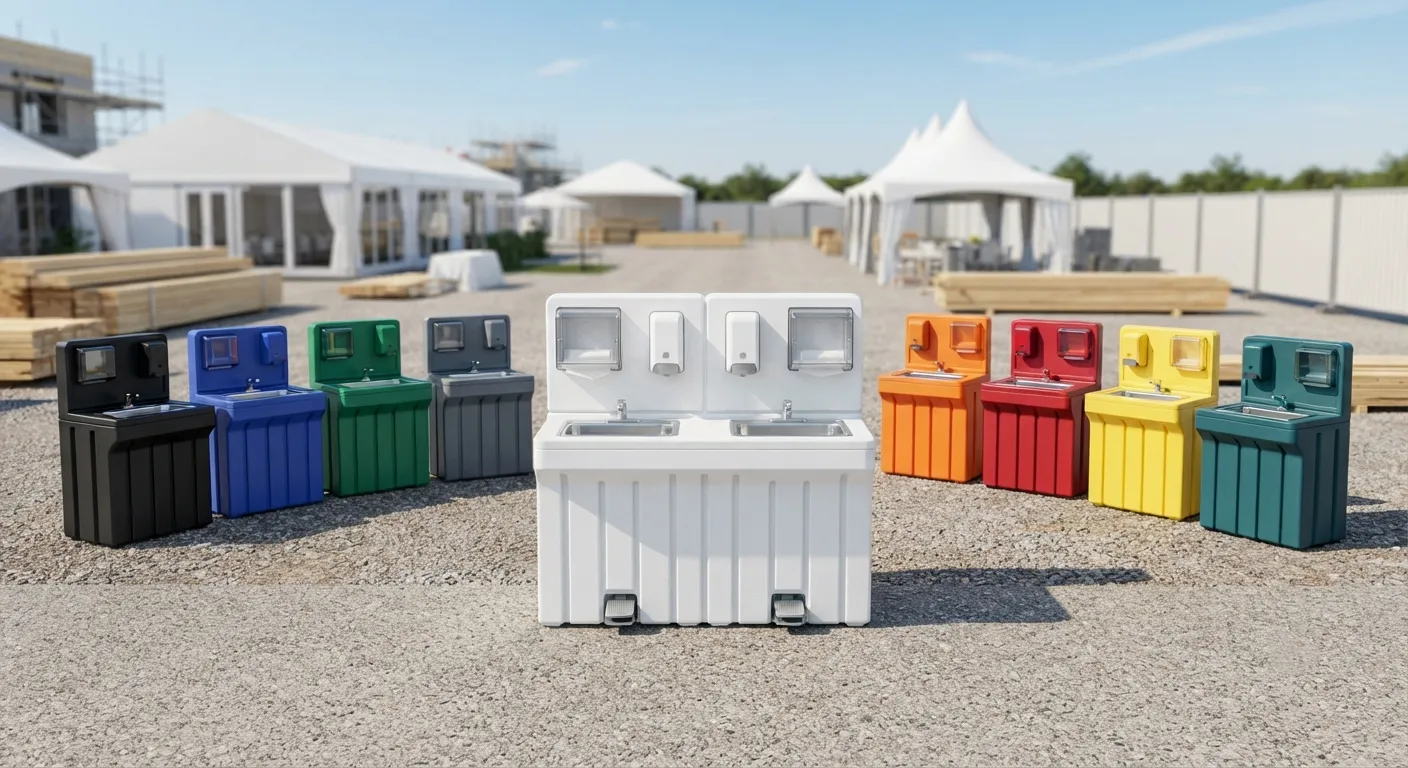
A portable sink runs on the same no-plumbing logic as a porta potty: a fresh water tank up top, a foot pump or sensor to push water through the faucet, and a gray water tank below to catch the runoff. Soap sits in a built-in dispenser. Under 29 CFR 1910.141(d)(2), a washing station has to supply soap and towels or a hand-drying device, since hand sanitizer alone doesn't meet that requirement, which matters for any crew running a handwashing station rental on a Bellflower jobsite. These stations pair naturally with restrooms on food service jobs and construction sites, and they're a fast add when a health inspector is due. For sites doing any spray work, OSHA 1926.51(f)(1) requires washing facilities where workers apply paints, coatings, herbicides or insecticides, so a portable sink isn't optional there, it's the compliance piece. Anyone unsure how many stations a crew needs should check the handwashing station requirements page before the crew shows up short.
Do porta potties need septic tank cleaning chemicals?
Yes, every unit gets a dose of blue deodorizing chemical after each pump-out, and it's what keeps a rented toilet usable between service visits instead of turning into a problem by day three. This is separate from a home septic system, though the underlying idea of breaking down solids is the same. A residential septic tank typically needs pumping every 3 to 5 years depending on tank size and household size, which is a different service entirely from portable toilet chemical treatment. If a homeowner in Bellflower is dealing with slow drains or standing water in the yard, that's usually a septic tank warning sign worth checking before it becomes an emergency septic service call. Restaurants have their own version of this cycle: a grease interceptor gets pumped once fats, oils, grease and solids reach 25 percent of the liquid depth, which is the trigger point covered on the grease trap pumping page.
| service | typical interval |
|---|---|
| standard porta potty | weekly, per ANSI/PSAI Z4.3 baseline |
| residential septic tank | every 3 to 5 years |
| grease interceptor | at 25% FOG depth |
How many porta potties does a construction crew need?
OSHA 1926.51(c) sets the ratio: one toilet for 20 workers or fewer, then one toilet and one urinal per 40 workers up to 200. A construction worker running to a porta potty on a tight site is usually a sign the count is short. See how many porta potties do I need for a full breakdown by crew size.
Do camping porta potties work the same way?
Yes, same holding tank and chemical setup, just sized smaller and often self-contained for portability. Groups near Cerritos, about 5.4 miles southeast of Bellflower, renting for weekend camping trips usually go with a standard porta potty rental rather than a flushable unit, since weight and simplicity matter more on remote sites.
Where can I find portable toilet chemicals near me?
Bellflower Porta Pros restocks chemical and paper as part of every scheduled service, so renters don't need to source it separately. If a unit runs low between visits, call to request an early service rather than let it sit unmaintained.
Is a service call included with a rental?
Yes, pricing structures typically bundle at least one scheduled pump-out into the rental period. Check the porta potty rental cost page for how day, week and month rates break down before requesting a quote.
Can a portable restroom sit on pavement or grass?
Both work, though grass needs to be reasonably level. ADA Standards section 302.1 requires stable, firm, slip-resistant surfaces for accessible units specifically. See the porta potty placement guide for delivery clearance details.
Next step
Get a delivery date
Tell us the address, the dates and the headcount. We size the order and confirm the route.